Our approach
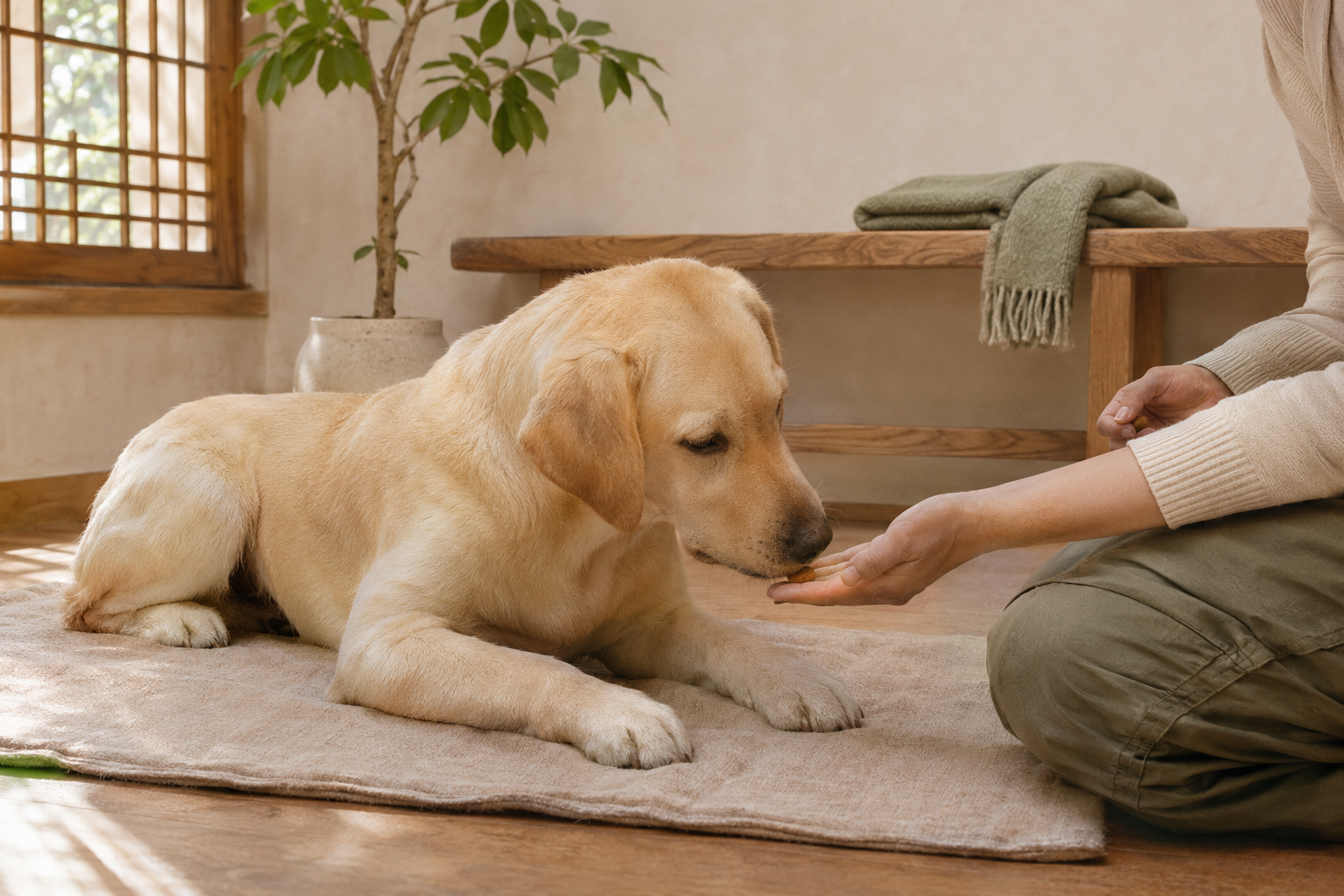
Dogs and people learn at different speeds. Notice and reward useful moments, make time for rest, and practise gradually in the places that matter.
 쉬어가는 연습 THE SPACE TO REST
More comfortable. Less hurried. A way that works for you both.
Dogs and people learn at different speeds. Notice and reward useful moments, make time for rest, and practise gradually in the places that matter.
Observe first
Consider your routine and your dog’s responses to find a comfortable starting point.
Make it smaller
One behaviour, a short practice and a clear cue create a chance to succeed.
Review together
Use your notes to adjust the difficulty and choose the next useful step.
A few useful questions
Is every dog suitable for assistance-task training?+
Health, temperament, environment and the handler’s needs all matter. Suitability for a role and training outcomes cannot be guaranteed in advance.
How is training approached?+
By rewarding useful behaviour and adjusting the environment. When a dog appears uncomfortable or afraid, increase distance and return to an easier step.
How long does training take?+
A fixed number of weeks cannot promise an outcome. Initial goals and review points are discussed around the individual team.
Does a training record allow access everywhere?+
No. Korean assistance-dog identification and access requirements are separate. Refer to official guidance and the relevant authority.